The Challenge
Our Approach
Autonomous. Deployable.
Earth-Independent.
The Kinvectum Connected Care Module (KCM) is a self-contained, AI-powered primary care outpost designed for the lunar surface. It monitors, diagnoses, and treats — even when communications with Earth are severed for hours or days.
While others are building the rockets, habitats, and hotels of the lunar economy, Kinvectum is building the essential medical infrastructure that makes these endeavors viable.
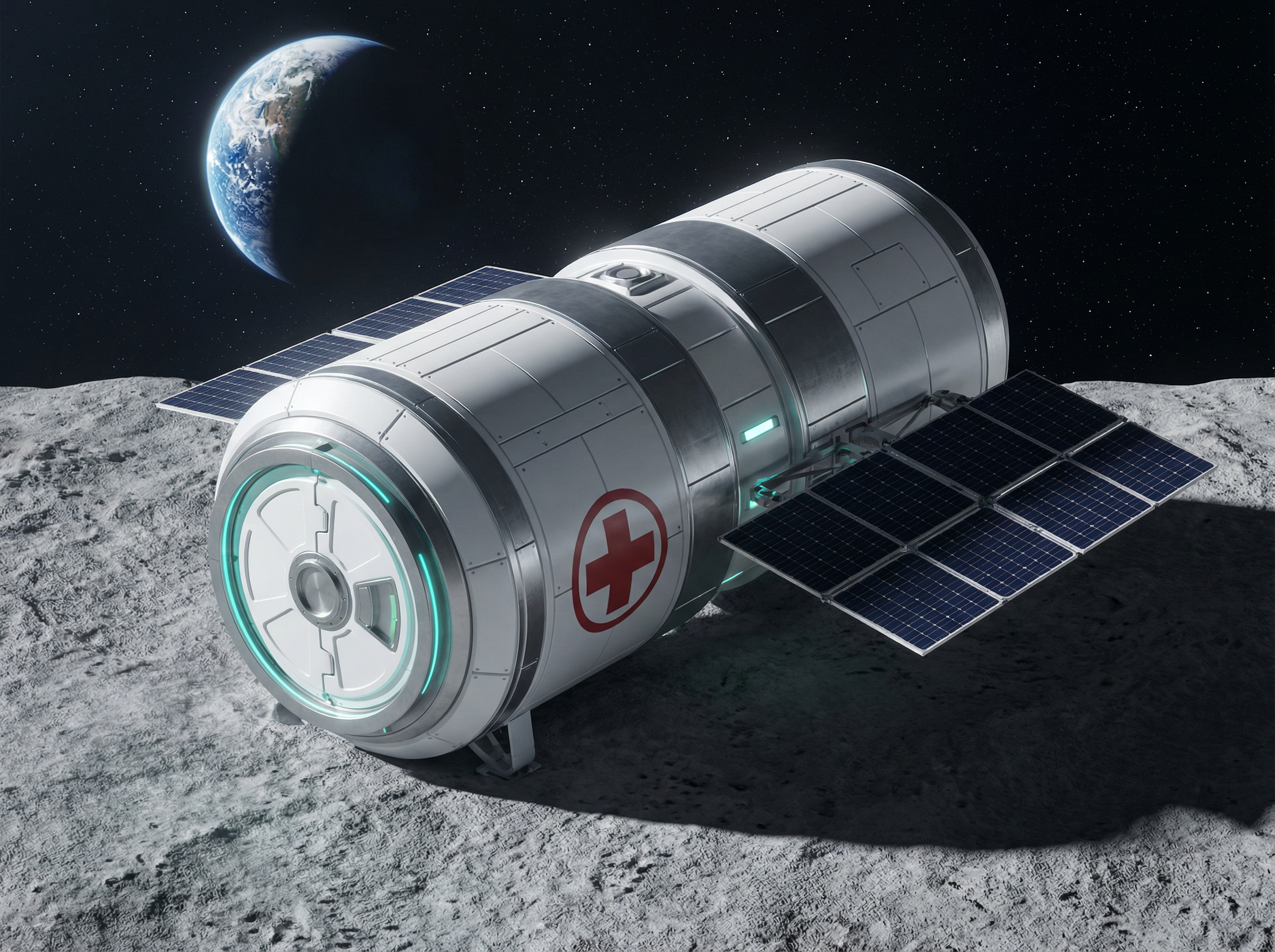
Kinvectum Connected Care Module — Concept Render
Technology
Four Pillars of Lunar Healthcare
AI Diagnostic Core
A multimodal clinical AI for autonomous triage and treatment guidance. When communications with Earth are severed, the Kinvectum AI guides a Crew Medical Officer through complex diagnosis and treatment protocols.
Continuous Biometrics
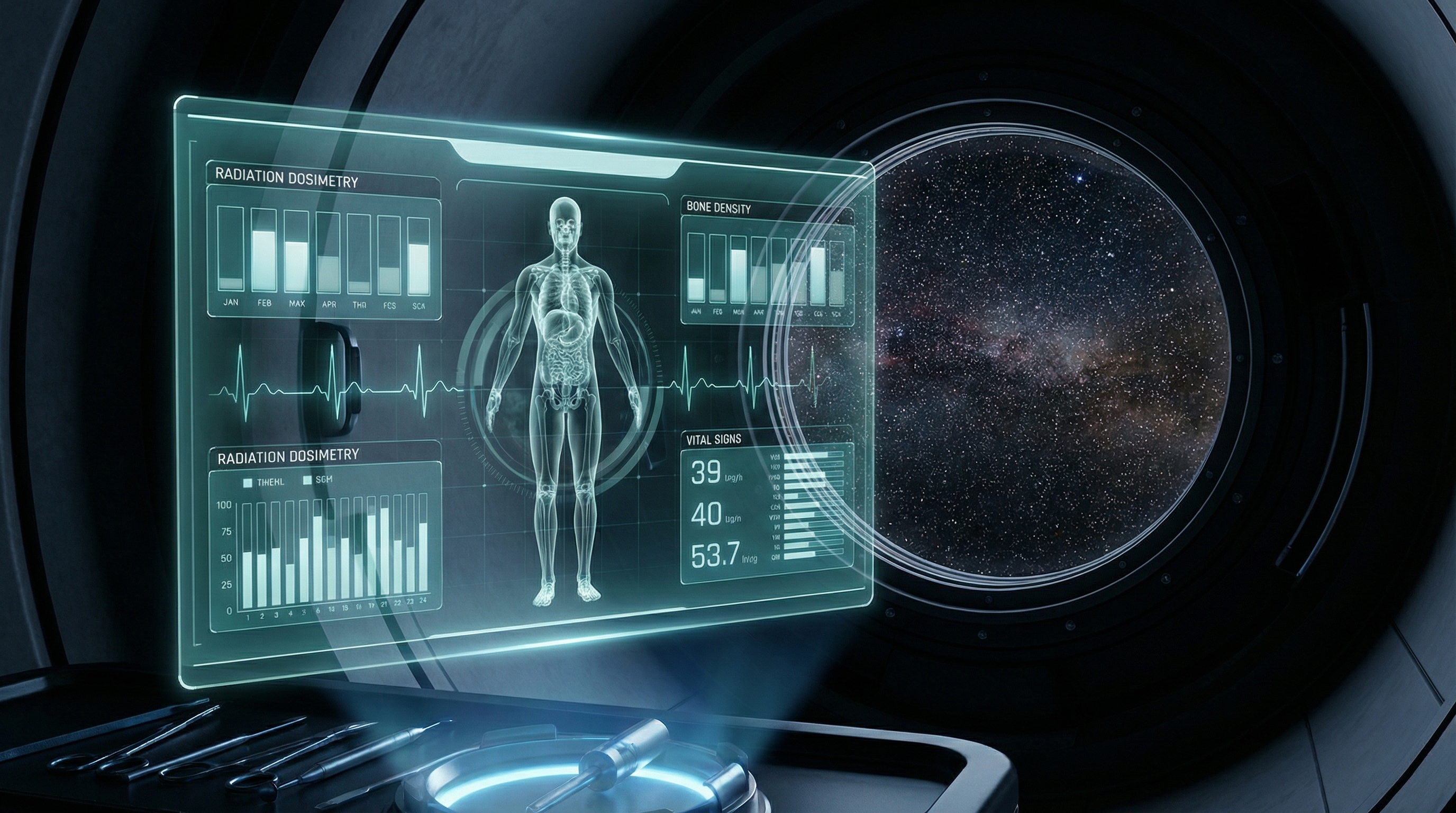
Real-time monitoring of radiation dose, bone density trends, cardiovascular function, and psychological state. Anomalies are detected before they escalate — shifting the paradigm from reactive treatment to proactive health maintenance.
Adaptive Pharmacy
On-demand pharmaceutical synthesis via 3D printing and stable formulation technology. Pharmaceuticals degrade rapidly in the high-radiation environment of space — Kinvectum ensures the right therapeutics are available precisely when needed.
Modular Architecture
CLPS-compatible, expandable, and radiation-shielded. The physical Kinvectum module fits within current commercial lunar payload constraints and features a dust-mitigating airlock and closed-loop life support integration.
AI-First Medicine
When Earth is 1.3 seconds away, you need a doctor that never sleeps.
The Kinvectum AI Diagnostic Core integrates speech, imaging, and biometric data to provide Earth-independent clinical guidance. Building on research from NASA and Google's Crew Medical Officer Digital Assistant, our system achieves diagnostic accuracy exceeding 85% across the most common lunar health emergencies.
The system continuously monitors all crew members, detects physiological anomalies before they become emergencies, and provides step-by-step treatment guidance to non-physician crew members — even during complete communications blackouts.
Estimated Timeline
A Phased Path to Permanent Lunar Healthcare
Earth Validation
Dual-Use Deployment
Terrestrial deployment of autonomous emergency pods to Antarctic research stations, offshore energy platforms, and disaster response zones. This phase validates the AI diagnostic core in real-world extreme environments while generating revenue that funds lunar R&D.
Uncrewed Lunar Testbed
CLPS Mission
A miniaturized precursor module launches via a commercial CLPS provider. Sensors, AI systems, and radiation shielding materials are validated against actual lunar regolith and environmental conditions. First medical telemetry data from the lunar surface.
Crewed Support Module
Artemis Integration
The first pressurized Kinvectum module supports early Artemis and commercial crews. Supporting 4–10 crew members for extended stays, this module provides AI triage, telemedicine, and basic treatment — healthcare infrastructure for the first generation of lunar workers.
The Lunar Clinic
Permanent Presence
A permanent, staffed primary care facility integrated into the mature lunar base. Comprehensive chronic care, minor procedures, and mental health services for a diverse population of scientists, engineers, and visitors. The foundation of a permanent human civilization beyond Earth.
Economic Model
Earth revenue today funds the Moon tomorrow.
The global market for remote and autonomous healthcare is immediately accessible and vastly larger than the space medicine market alone. By deploying terrestrial variants of our autonomous medical pods to Antarctic stations, offshore platforms, and disaster response zones, Kinvectum generates revenue that directly funds lunar R&D.
For commercial lunar operators — habitat developers, mining companies, and tourism operators — the presence of a Kinvectum Health facility is not just a safety requirement. It is a critical value proposition that makes their operations viable and their clients confident.

Phase I — Terrestrial Analog Deployment
The Case for Lunar Healthcare
Why primary care is the most important infrastructure on the Moon.
Our whitepaper explains how the first autonomous medical facility on the Moon becomes the foundation for scalable human presence beyond Earth. It outlines the physiological realities of the lunar environment, the technology stack required to address them, and the economic model that makes it viable today.